
The Costa del Sol property market remains healthy, but increasing supply and rising asking prices are… more

Buying a property is one thing. Owning it also comes with ongoing costs, and these are worth understanding before you decide which property is right for you.
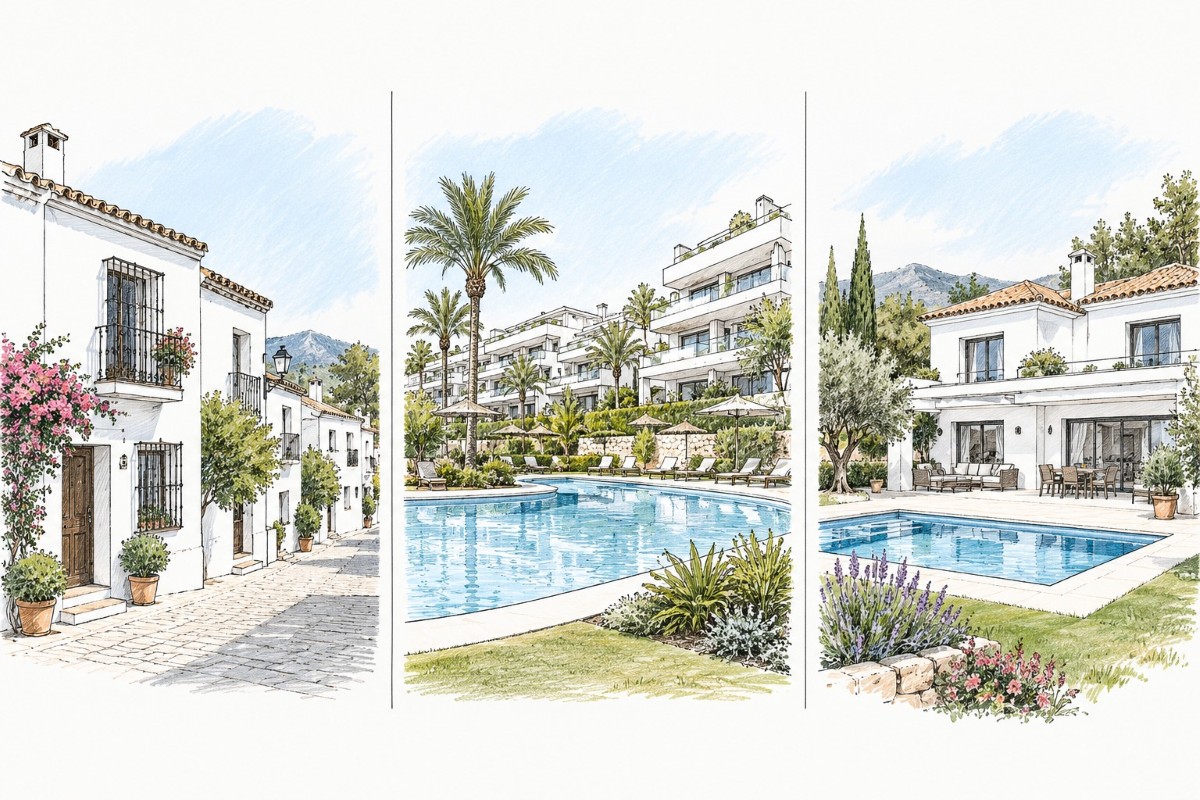
There is no standard figure for the annual cost of owning a property on the Costa del Sol. A simple townhouse with no communal facilities can have very different running costs from an apartment in a community with extensive gardens, swimming pools, a gym, spa facilities, security and concierge services. A large villa with a private pool and landscaped gardens will have different costs again.
The important thing is to ask for the figures, understand what you are paying for and consider whether those costs make sense for the way you intend to use your home.
IBI (Impuesto sobre Bienes Inmuebles) is the annual municipal property tax paid by property owners in Spain. The amount depends on the property and the municipality in which it is situated, and there can be significant differences between one municipality and another.
There may also be a municipal charge for rubbish collection, normally referred to as basura. Again, the amount and the way it is charged can vary according to the municipality.
When considering a property, ask what the current owner pays. It gives you a much more useful indication than trying to work from a general estimate.
If you buy a property within a community of owners, you will normally pay community fees towards the upkeep and running of the communal areas and services.
The amount can vary considerably depending on what the community provides. A relatively simple community with gardens and a swimming pool will normally have different costs from one providing extensive landscaped areas, several pools, lifts, security, concierge services, a gym, heated indoor pool, sauna, co-working facilities or other amenities.
There is nothing inherently good or bad about higher community fees. The question is what you are receiving in return and whether those facilities are important to you.
When we are helping buyers find a property, this is one of the things we discuss. Will you use the gym, heated pool, sauna or other facilities? If you will use and enjoy them, you may be very happy to contribute towards their cost. If you will never use them, you will still be paying towards their upkeep, and a simpler community might suit you better.
It is also worth checking whether there are any current or agreed extraordinary community contributions, known as derramas, for major works. These are separate from the normal community fees.
For many owners, particularly those who will not be living on the Costa del Sol throughout the year, community fees can provide something very valuable: convenience.
You can lock the door, go home and return several weeks or months later knowing that the communal gardens, swimming pools and other shared areas have continued to be looked after.
For some buyers that is exactly what they want. Others prefer an independent property without community fees and are happy to take responsibility for the maintenance themselves. Neither choice is better. It depends on what suits you.
An independent villa may not have community fees, although some villas are situated within communities and do have them. Either way, the property itself will have running and maintenance costs.
A larger garden generally requires more water and maintenance than a smaller one. A private swimming pool needs cleaning, chemicals, water, electricity and equipment maintenance. Pool heating, sophisticated irrigation systems and extensive exterior lighting can add further costs.
Some owners employ gardeners, pool maintenance companies and cleaners. Others prefer to do some or all of the work themselves.
Again, it comes down to choice. If having a large garden and private swimming pool will give you pleasure, their upkeep is simply part of owning the property you want.
As with any home, you will need to budget for electricity and water together with any other utilities you use.
Internet and telecommunications, home insurance and alarm or security services may also form part of your regular expenditure.
Actual consumption will obviously depend on the property and how you use it. A home occupied throughout the year will have a different pattern of consumption from a holiday home used for a few weeks or months.
Some second-home owners employ somebody to look after their property while they are not in Spain. This might include cleaning, keyholding, checking the property periodically or arranging maintenance when something needs attention.
These services are optional. Some owners value the convenience and reassurance they provide, while others make their own arrangements.
Every property needs maintenance eventually.
Air-conditioning systems need servicing, appliances need replacing, properties need decorating and equipment wears out. Older properties may require more attention, while newer or more sophisticated homes can contain more equipment and systems to maintain.
It is impossible to put a meaningful standard annual figure on general maintenance, but it is sensible to allow for it when considering the overall cost of ownership.
If you own a property in Spain but are not tax resident here, there may also be Spanish non-resident income tax to pay, including in circumstances where the property is not rented.
The tax position depends on your individual circumstances and how the property is used, so appropriate tax advice should be taken where necessary.
If you rent the property, there are additional tax and regulatory considerations which should be looked at separately.
Over the years we have seen buyers become increasingly conscious of ongoing ownership costs. Questions about IBI and community fees are now often among the first things buyers ask when considering a property, and quite rightly.
Before buying, establish the actual costs wherever possible. Ask how much the IBI and basura are. If there is a community, ask what the community fees are and what they include. Consider the likely costs of maintaining any private garden or swimming pool and think about the services you will choose to use.
Most importantly, consider whether you are getting value from the things you will be paying for.
A heated pool, gym, sauna, concierge service or extensive communal gardens can all be worthwhile if they are things you want and will enjoy. If they are not important to you, there may be little point choosing a property where you will be paying for them.
Our job when helping you find a property isn't to persuade you that you need particular facilities. We ask questions because we want to understand what you actually want from your home, how you intend to use it and what will give you value and enjoyment. We can then help guide you towards properties that fit the bill.
The purchase price is therefore only part of the picture. Ask for the figures before you buy, consider what you are getting for your money and choose a property whose ongoing costs make sense for you.
Buying a property naturally raises questions. We've brought together answers to many of the questions buyers regularly ask us.