
Living a little above Marbella doesn't necessarily mean compromising on convenience. Las Lomas de los… more

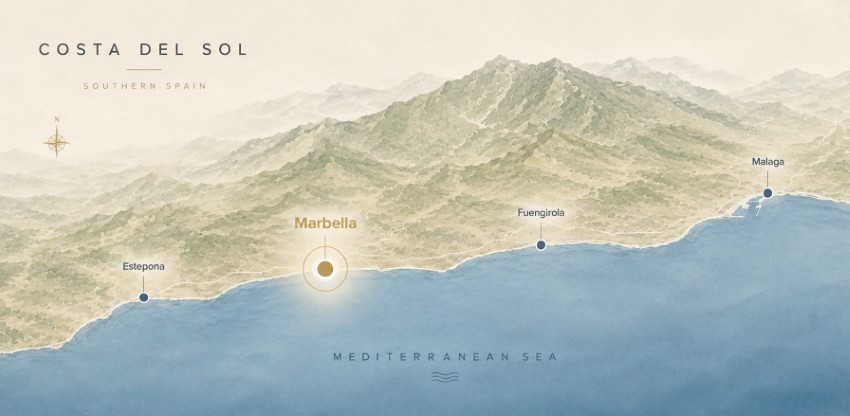
Marbella is one of those rare names that’s become more than just a place. For many, it represents the idea of a lifestyle — the designer capital of the Costa del Sol, known for its glamour, sunshine, and international flair. But there’s much more to Marbella than just luxury labels and beach clubs. It’s a place with layers, a history, and a rhythm of life that’s quietly adapted over the decades.
People often forget that Marbella was once a sleepy coastal town with little more than whitewashed houses and fishing boats. That changed in the 1950s and 60s when a handful of European aristocrats and creatives discovered its charm — drawn by the light, the setting, and the climate. Since then, Marbella has grown steadily, but it hasn’t lost that original magnetism.
Today, Marbella is home to a truly international community. People come from all over Europe — and increasingly from further afield — to make their homes here, whether for part of the year or for good. What they find is a place that knows how to balance tradition and modern living. Yes, there are designer boutiques and fine dining restaurants, but there are also local markets, tucked-away tapas bars, and friendly neighbourhood cafés where life ticks along much as it always has.
Geographically, Marbella is larger and more varied than many first realise. The area stretches from the old town, with its cobbled streets and orange trees, out through leafy suburbs like Nueva Andalucía, Sierra Blanca, and Las Chapas, and along the Golden Mile to Puerto Banús and beyond. Each corner has its own personality — from the family-friendly feel of Elviria to the golf-focused lifestyle of Los Naranjos or the beachside buzz of San Pedro.

What continues to attract people to Marbella is a combination of things that are hard to replicate elsewhere. The weather, of course, is near-perfect. The setting, between the sea and the mountains, gives it a dramatic beauty. But perhaps more importantly, it has a strong infrastructure — international schools, medical facilities, services — and a long-standing openness to people from different walks of life.
Marbella has changed, yes. It’s grown up, modernised, and in parts, become more polished. But it hasn’t lost its soul — and if you ask most people who’ve lived here a while, they’ll tell you that it’s still one of the most enjoyable places in Europe to live.
Whether you’re looking for a home in the heart of the action or a quieter base a few minutes inland, Marbella remains a strong, enduring name on the Costa del Sol — for good reason.

