
The recent A-7 access closures in Elviria have brought a wider problem into focus. As traffic grows, difficult junctions and journeys along the coast are affecting everyday life, while changes to the road do not always provide workable alternatives.
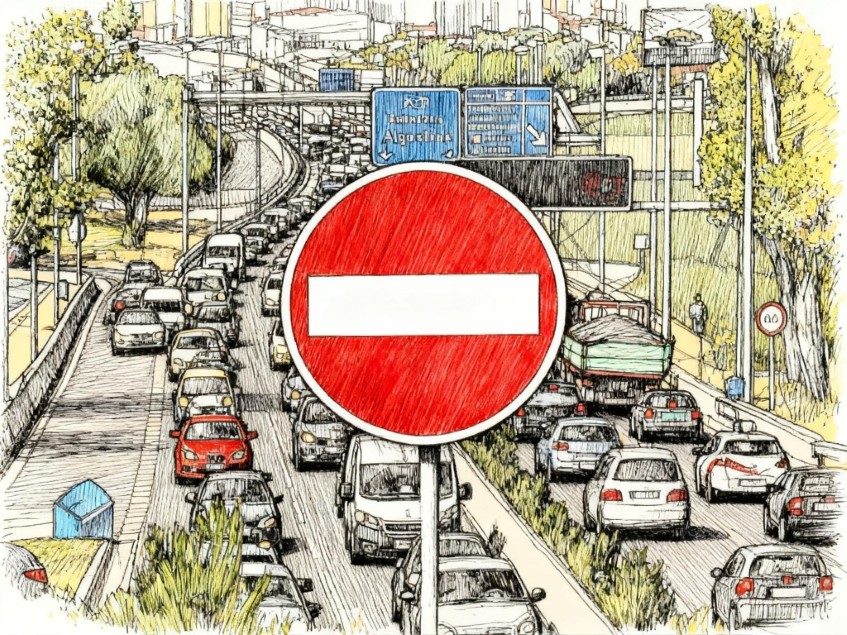
Another traffic jam, and where has the junction gone?
The recent closure of access to the A-7 around Elviria and Las Chapas has understandably upset people who live there. As SUR in English reports, the Golden Beach closure went ahead without advance notice to residents, while work to improve the internal roads was still unfinished. Residents have found themselves taking unfamiliar routes through local streets, with some reporting that very short journeys now take 15 or 20 minutes. The question is not simply whether an old access should remain open. It is what happens to everyone who used it when it closes.
Some of these entrances and exits were designed for a very different road. Joining today's A-7 from a junction with no proper slip road and poor visibility can be difficult and dangerous. I can see the case for changing them. But if an access is closed before a practical alternative is ready, traffic is pushed into nearby streets and other junctions. Residents need clear advance information, signs showing where to go and local roads capable of taking the diverted traffic.
This is part of a much larger problem. When I drove from Málaga towards Marbella around 40 years ago, the road was the N-340. You drove through Torremolinos and Benalmádena, although there was a bypass at Fuengirola. Coming through Elviria, you might see a car reversing out of a parking space onto the road or someone crossing it carrying a lilo. It was a road that served the places along it.
It has changed enormously since then. The A-7 is now a major route for people travelling along the coast, as well as the road many of us need to use to reach neighbouring communities. Yet some of its junctions and the streets feeding into them still reflect a much quieter time.
Costalita is a good example. Ten years ago, I could go there without giving the journey much thought. Now parking is difficult and the junctions are often clogged. Joining the A-7 towards San Pedro is particularly awkward: there is no proper slip road, visibility is poor and drivers already on the road do not always make it easy for someone to pull out. More homes and more cars have added pressure to an access that was not well designed in the first place.
And growth is not limited to entirely new communities. Existing homes are being altered too. A two-bedroom property becoming a three-bedroom property could put another car on the road, and changes like that, repeated across an area, add to the number of people using the same streets and junctions. More homes are planned in East Marbella, and the proposed expansion of La Bajadilla marina will also bring activity. Each project may be considered on its own merits, but those travelling on the A-7 experience their combined effect.
We have also seen that a major road project does not automatically resolve a bottleneck. The tunnel at San Pedro should have made it easier to pass the town, but I have often seen traffic backed up towards it at the Marbella end. Yesterday, while crossing over the A-7 with Billy, I could see a long queue heading through the tunnel towards Puerto Banús. Only the occasional car appeared to be taking the AP-7. The toll road exists, but on that occasion it was doing little to relieve the queue I was looking at.
The way people drive is part of the picture too. Impatient driving, difficult merges, poor visibility and junctions that cannot handle the volume of traffic make one another worse. Closing an access may address one danger, but it cannot be the whole answer if the traffic is simply transferred to another unsuitable junction.
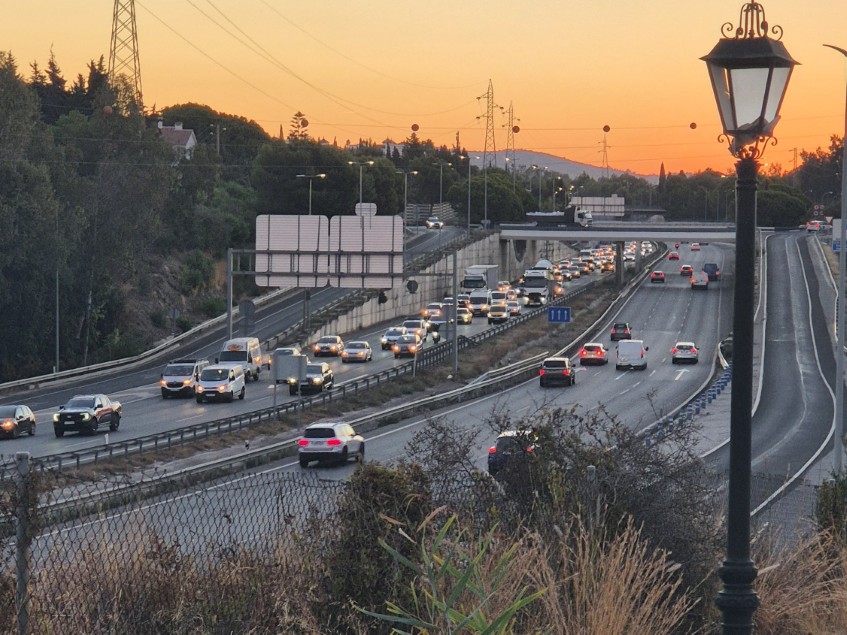
For work, I have to use the A-7. In my own time, I avoid it whenever I can. Before a work journey, I look at Google Maps to see whether a trip that might take 25 minutes is going to take more than an hour. For an ordinary outing, I often decide it is not worth the hassle. If someone suggests lunch in Fuengirola, I am unlikely to go. The same applies to La Cala or Estepona unless I have a particular reason to be there. I try to keep day-to-day life within an area where I do not need to use the highway.
That is a real change in how we live along the coast. The immediate concern in Elviria is how residents are meant to get around after these closures. The wider question is how we accommodate continuing growth, improve the junctions that need improving and return to fix changes that do not work in practice. The roads need to function for the people who already live here, as well as those who will come in the future.
We can only hope that the people doing the planning do have an idea of what they are looking to achieve. From past experience, I have my doubts.