
Marbella’s microclimate is one of the main reasons why so many people choose to spend more time on the Costa del Sol, attracted not only by the temperatures, but also by the quality of light and outdoor lifestyle throughout the year.
Why is Marbella's microclimate so attractive?
Marbella is famous for its microclimate, but how different is it really from the rest of the Costa del Sol?
Spend enough time reading about Marbella and sooner or later you will hear about its famous microclimate. It is often presented as one of the reasons why Marbella enjoys such exceptional weather, but like many things associated with property and tourism, the reality is perhaps a little more layered.
Marbella does have a microclimate. The geography is certainly there to create one. But it is also probably fair to say that its importance is sometimes overplayed. The first thing to remember is that the whole of the Costa del Sol enjoys a remarkably moderate Mediterranean climate. Estepona, Marbella, Fuengirola and Benalmádena all benefit from relatively mild winters and warm summers without regularly experiencing the temperature extremes found in many other parts of Spain. Look at published average temperatures for Marbella, Estepona and Fuengirola and there is remarkably little difference between them. On paper, you might reasonably wonder what all the fuss about Marbella's microclimate is about.
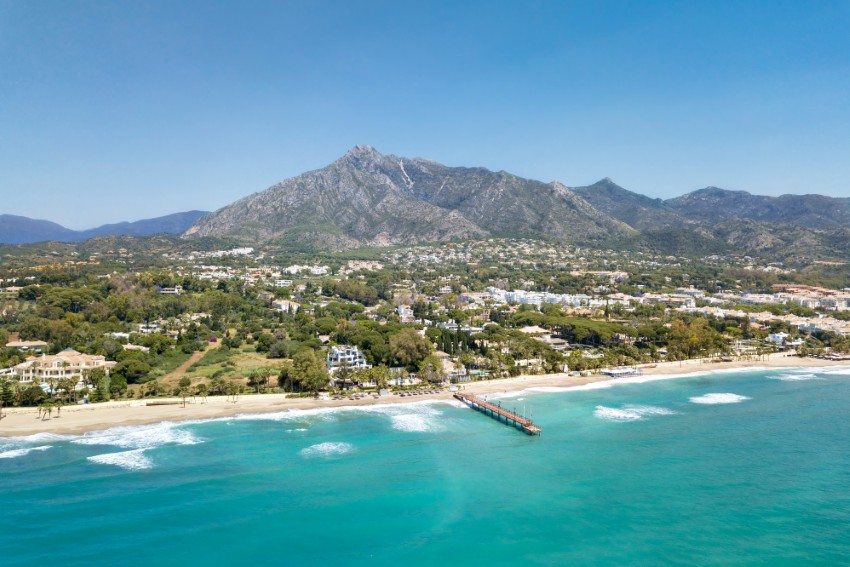
Part of the answer lies in what we mean by Marbella. The municipality covers a large area, stretching for many kilometres along the coast and inland towards the mountains. A microclimate, by its very nature, is much more localised. The area normally associated with Marbella's microclimate is the relatively narrow coastal strip sheltered by Sierra Blanca and, most noticeably, La Concha, which rises immediately behind Marbella. With the Mediterranean directly in front, this creates a particular geographical situation which can influence local temperatures, wind and weather conditions. The mountains provide a degree of protection from weather arriving from inland, while the Mediterranean has a moderating effect on temperatures. It doesn't mean that Marbella is always warmer, cooler or sunnier than neighbouring towns. In fact, on some days there may be very little noticeable difference at all. On others, however, the difference can be surprisingly obvious.
Living directly between La Concha and the sea, I have often noticed that during the summer the temperature can rise by several degrees when driving east towards Fuengirola and Benalmádena. Equally, comparing the weather with friends living elsewhere along the coast can sometimes produce noticeable differences over relatively short distances. That is personal observation rather than meteorological evidence, but perhaps it illustrates what a microclimate really is. It doesn't necessarily mean better weather. It means that local geography can create slightly different conditions from those experienced only a relatively short distance away.
Perhaps we are inclined to concentrate too much on the temperature anyway. Many people come to Marbella for the weather but, after living here for a while, it is often the quality of the light that they begin to appreciate. For people coming from Northern Europe, particularly during the winter months, the contrast can feel quite dramatic. Shorter days, grey skies and long periods indoors are simply accepted as part of everyday life in many countries. Here, even during winter, there are many days when the brightness encourages people to spend much of the day outdoors.
It is not simply about heat. In fact, many people who live on the Costa del Sol permanently prefer spring, autumn and winter, when temperatures are more moderate but outdoor living can still remain part of everyday life. Eating lunch outside in January, walking along the Paseo Marítimo on a bright winter morning, sitting on a terrace or playing golf throughout much of the year gradually become normal.
Of course, neither Marbella nor the Costa del Sol has perfect weather. Summers can be hot, winters can be wet and occasionally the weather can be decidedly unpleasant. A microclimate doesn't provide an invisible umbrella over Marbella. What it does provide is a subtle local variation within a much bigger climatic advantage.
Perhaps that is the important distinction. Marbella's microclimate is real, but it shouldn't take away from the fact that the Costa del Sol as a whole enjoys a moderate climate and abundant natural light, giving people the opportunity to spend a large part of the year outdoors.
For many people who choose to live here, that matters rather more than whether the temperature on any particular day is a degree or two warmer or cooler.
If you are looking for property in Marbella and would like some help, call us on (0034) 952 90 52 00, WhatsApp us, or email info@michael-moon.com. We look forward to hearing from you.